
On Jack DeJohnette's Passing

Updated: Jan 11

When Jack DeJohnette died, it hit me in a way that didn’t make much sense on paper. I never met him. I never studied with him. I never had to figure out what you say when you’re suddenly face-to-face with someone who’s shaped a huge part of your musical life. But it didn’t land like news about a distant legend. It felt closer to losing someone whose playing had been a constant presence in the background of my own growth.
I wish I could say I remember the exact first track I heard him on, but I don’t. I have very distinct memories of the first recordings I heard of Tony Williams and Elvin Jones, but for some reason there’s a gap in my memory for Jack. What I do remember is a Christmas in Dallas when I was fifteen, unwrapping the complete Keith Jarrett Live at the Blue Note box set. A massive six disc blue-ish/green ECM brick. At that point I didn’t know a massive amount of standards - at least not in a way that would make those records easy to decode. Trying to learn tunes off that box set, as a kid who could barely hear the changes, was a daunting task. Keith is stretching everything, reharmonizing, pulling forms apart. This was the early 2000s, before you could just search “Autumn Leaves transcription” and drown in PDFs. If you didn’t grow up in proximity to New York/LA, you were pretty much limited to what your teachers handed you and whatever the local record store happened to have.

My early drum idols were Tony Williams and Elvin Jones, and I was already decently immersed in their vocabulary and discography (as much as a teenage drummer in 2003 could be). At some point a teacher said, “If you like those guys, you should listen to Jack DeJohnette. Check him out with the Keith Jarrett trio.” I suspect that’s how I wound up with that box set for Christmas.
Out of those six discs, I have the most vivid memories of the first times I heard “Autumn Leaves” on the third disc and “On Green Dolphin Street” on the fifth disc. I think I was around 15 at the time. I immediately heard Jack as something different - not just “another great drummer.” His swing beat was centered but almost liquid, flexible in a way that felt impossible and natural at the same time. The time felt wide open and three-dimensional. The way he incorporated the hi-hat was completely different from what I’d been hearing with Tony and Elvin; it functioned like an independent melodic line with a totally different logic from Elvin/Tony. He’d ride on tiny bells during the long vamps or use splash cymbals as comping or color. It was clearly informed by Tony and Elvin, but he was applying that lineage with a totally different sonic approach.
What I initially remember being fascinated by was Jack’s non-repetitive ride patterns. It sounds silly now, but intelligently breaking the endless “spang-a-lang” loop felt like an unsolvable mystery for me when I was younger. DeJohnette became my north star for how to solve that problem. Of course I was familiar with the ride playing of Elvin, Tony, Roy, and many other 60’s giants known for non-repetitive ride playing, but something about Jack’s stood out. A lot of my own ride playing - where I put shoulder crashes, how I orchestrate/phrase over longer arcs, how I imply elasticity in swing time - comes straight from that box set.

At some point I read or heard him describe his sense of time like a washing machine. Each limb is a different object bouncing around inside the washer, but the machine itself is rotating at a constant rate. I don’t know if I remember the quote exactly, and I almost don’t want to check - the version I’ve been remembering for 20+ years is perfect. That’s exactly how his time feels to me: all these independent motions orbiting something invisible but steady.
I would argue that the washing machine analogy also applies to his vocabulary and approach to orchestration - both as a timekeeper and soloist. I wasn’t aware of the washing machine ideology when I heard those records for the first time, but that approach to time and orchestration is stamped all over that box set.
This all immediately caught my attention - Jack wasn’t a “lick” player. He was also an incredibly risky improviser, and I believe that contributes to a lot of the “non-transcribable” elements of his playing. Sure, Jack has zones he lives in or orchestration approaches he deploys, but there’s not so much directly quotable material. I personally believe this has led to a great deal of misunderstanding about Jack in the general drumming community.
For whatever reason, among many of the drummers I’ve known, he’s weirdly under-discussed. Obviously, drummers know the Keith/Miles records, but it tends to stop there for a lot of people. Typically, I make more friends with guitarists/pianists/bassists who know Jack from his ECM adventures. When I do meet drummers who love Jack as much as I do, we tend to click quickly.
All I will say is this: If your only reference point for Jack is the Keith Jarrett Trio, you’re missing a lot. And if the only other Jack you know is the Miles electric band, you’re still only holding two corners of a huge map. He’s done so much, in so many different contexts, that trying to boil him down to “the guy with Keith” or “Miles’s electric drummer” feels almost insulting.

The piece that really blew my understanding of him open was realizing how strongly he was connected to the AACM. After I moved to New York in 2011 and my interests began moving more in the avant-garde direction, I started diving deeper into the music of Muhal Richard Abrams, Anthony Braxton, Roscoe Mitchell, Henry Threadgill, and Wadada Leo Smith. At some point, I put together that Jack had been part of Muhal’s Experimental Band in Chicago in the 60s - they had all come up together.
I think I was having this realization around the time Made in Chicago came out. That record clarified a lot of things for me. I’d always known DeJohnette played piano and composed (I actually was lucky enough to see the trio with Jack, Ravi Coltrane, and Matt Garrison several times, and during one of those gigs Jack played more piano than drums), but tying him explicitly to the AACM lineage of multi-instrumentalism and active composition made me understand his drumming even more.

If you listen to how he plays on the duo projects with Wadada, or how he comps on Made in Chicago, or any of his own leader projects, and then go back to Miles or Keith recordings, you can hear the same mind at work in completely different environments. The risk level, the way he messes with time, the sense of form: it’s all coming from the same place.
There are so many DeJohnette records that have had major impacts on me over the last 20+ years… I’ll probably write about more of them in the future, but I wanted to take a second to talk about a few of my favorites.
I want to start with Gateway - the trio record with John Abercrombie and Dave Holland. This is an absolute desert-island record for me. I first read about it on AllMusic when I was in high school - long before streaming was a thought and after Napster and LimeWire had officially been shut down. There was a used CD store in Dallas with a surprisingly deep jazz selection - I suspect this was due to proximity to UNT and kids selling their CDs when they left. The description I had read in AllMusic about Gateway made it sound like this perfect hybrid: some grungy fusion energy (which made sense given Jack and Dave’s history with Miles), some free improvisation, some “swing”, and that ECM atmosphere that I was already drawn to.

It sounded like the greatest record ever made… The only problem was I couldn’t actually find it. My record store never had a copy. In fact, no record store in the entire DFW metroplex had a copy. Trust me - I checked regularly. And to add insult to injury, none were able to order it. I still don’t have an answer for that - I suspect it might have been out of print for a year or two. Whatever the reason, it turned into this weirdly unattainable object.
I went back to my regular record store at least once a week for well over a year, asking every week if Gateway was in stock or available to order. Shockingly, one day when I walked in to do my rounds, the employees VERY excitedly informed me that they could finally order the album.
I remember the day I picked that album up. I remember walking out to my car, unwrapping the CD before I even sat down, and shoving it into the player. I remember sitting in the parking lot as Dave Holland starts the opening track, “Back-Woods Song,” with one of the most epic (and apparently very difficult to play) bass vamps I’ve ever heard. Of course, this is followed by Jack entering with the most perfect fill imaginable, and then we’re off to the races. It was one of those rare moments where the record sounds exactly like what you hoped it would. That moment, coupled with the sixteen-month hunt, made it one of the most formative experiences of my musical upbringing. I share this memory with my students often - I don’t know that I’ll ever experience something like that again.
I learned so much from that record - it specifically had a huge impact on my free playing. This wasn’t something I really noticed until many years later (decades, really) when I was working with Stephen Gauci’s trio with Adam Lane. I was revisiting Gateway and “Unshielded Desire” came on… and there it was. The way they handle time - this weird space that is half-open and pulse-oriented but explosive, using up-tempo jazz vocabulary in a totally new context. This is a huge part of how I conceptualize playing in Gauci’s trio. It’s loose and organic, it’s also hyper-rhythmic, but there’s a clear pulse and defined architecture underneath.
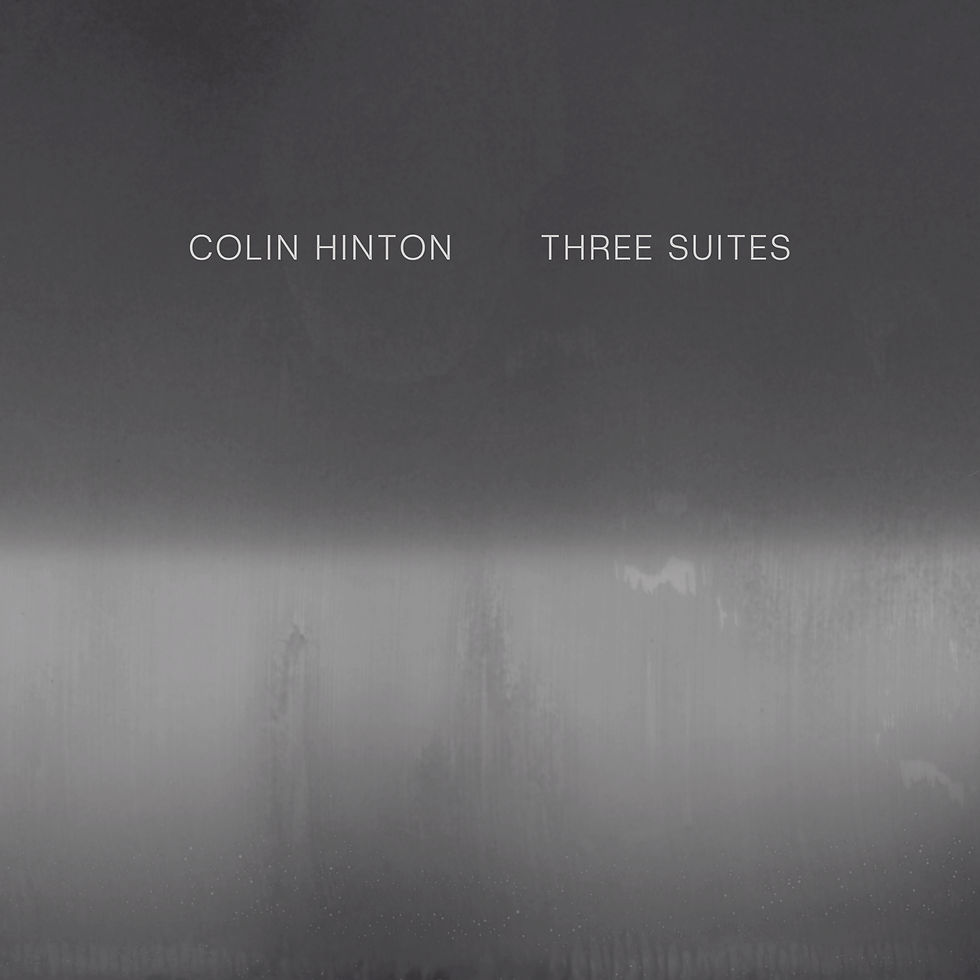
If Gateway taught me about navigating that open pulse, the self-titled trio record with Terje Rypdal and Miroslav Vitous completely reshaped my sense of pacing and opened me up to the possibilities of orchestration on the drumset. This album brought up questions that I wouldn’t fully answer until years later - after both studying with Ed Soph, and then later after I moved to NYC following Tom Rainey around.

The first track, “Sunrise,” is one I wore out driving around Dallas at night. It’s basically a lesson in how to build density and intensity without necessarily increasing volume. Jack achieves this through pure development and orchestration. He starts with only the ride cymbal, then gradually introduces other colors: first the open hi-hat, then a China cymbal, then the snare. He gradually introduces more colors, never abandoning the previous ones. If you listen closely to the smaller repetitions inside the vocabulary - the ordering of the legato metallic sounds - you hear the attention to detail. Each idea seems to bleed into the next, picking up steam without losing the thread.
The real kicker is that Jack doesn’t even introduce the bass drum until about 1:45. And when he does… oh boy.
That entrance is so beautifully chosen it still knocks me out. You’ve already been pulled into this hypnotic world of hands and left foot, and then suddenly it’s like an explosion goes off when the low end finally enters. It’s such a simple orchestration choice, but it takes a composer’s mind to delay it that long. This record came out in 1979. You hear drummers doing that kind of thing more often now - Ed Soph, Tom Rainey, Gerald Cleaver, and Tyshawn Sorey come to mind immediately - but when I first heard this in 2005ish, it was totally radical to my young/naïve ears.

Even the way he treats more “straight-ahead” situations carries that same mindset. Ed Soph put me onto the Bill Evans at Montreux record with Eddie Gómez when I was at North Texas, and Jack sounds shockingly raw on it. It was the only Bill-and-Jack documentation for a long time, and you can hear him pushing the trio in ways you don’t usually hear under Evans. He rushes some things, he gets aggressive, it’s messy in a very alive way – very much a precursor for how he would later play with Keith (for my two cents). The solo on “Nardis” is still one of the most baffling and inspiring drum solos I know. There are big chunks where I still have no idea what he’s actually doing, and I love that about it. It’s been an open question in my ears for almost twenty years.

Live-Evil was my doorway into Miles’s electric band. Michael Henderson’s bass lines on that record are forever etched into my psyche, and Jack’s approach to groove on that record… how he plays backbeats, how he uses linear ideas inside “rock” contexts… this all completely scrambled my sense of what it meant to play funk/rock. At the time, I misunderstood it entirely. I would get called for bar bands and cover gigs and think, “Cool, I’ll do my version of Jack on Live-Evil” (later with a healthy sprinkling of Keith Carlock)… and then much to my shock I’d get fired. I didn’t understand the difference between bringing that language into the right context and just forcing it onto every situation. I was young. But the elasticity I heard in those grooves is still a big part of how I think about time/groove.

The Festival de Juan-les-Pins recording of Miles’s band - the so-called “lost quintet” - is another one Ed put me onto. I remember him showing it to me in a lesson to talk about playing with sustained intensity and how to build architecture when holding a high dynamic level for a long time. The band starts with “Directions,” and from Jack’s first entrance after Chick’s intro, I was absolutely floored. At the time, I couldn’t really hear what Jack was doing at all, much less as being “in time.” I can now, but my understanding of time/feel/groove/etc is also about 20 years more mature than when I first heard that record. That shift - learning to hear that level of rhythmic elasticity as still being anchored - has been huge for me. It’s definitely led to certain issues in my playing at different times in my life, but it’s also led to me having (what I hope to be) a much more open approach to time: free playing, swinging, trading, groove – they’re all different manifestations of the same thing.

Kenny Wheeler’s Gnu High came into my life via a roommate at North Texas, Roberto Verástegui, who was another deep Jarrett/DeJohnette person. I already knew Kenny from The Widow in the Window, but Gnu High is a different thing. Jack’s playing on “Heyoke,” especially behind Keith’s solo, is this perfect blend of looseness and clarity. One of my favorite spots, around 4:25, Keith plays this beautiful line, leaves a huge amount of space, does one of his classic grunts, and Jack answers with the most perfect bass drum response and snare + cymbal crash resolution. It pushes the whole thing over the edge. Everything on the record grooves hard, but the time feels like it’s breathing. I’m still chasing after these ideas in my own playing - I hope I always will be.
I realize I haven't even touched on his prolific output as a leader, or the vast majority of his side-man work. But that’s the nature of Jack - the map is always bigger than you think.
He was a harmonically attentive drummer in a way that feels very tied to the fact that he was also a pianist and composer. As I’ve grown more serious about composition, I’ve started to notice more of this in his playing: the way he reacts to harmony, the way he shapes dynamics over phrases, the way he uses texture as a structural element instead of just color.

That’s the biggest shift for me as I’ve gotten older. When I was a teenager, I heard the looseness and the speed and the sound. Now I hear the decision-making. I can feel when he’s delaying a color for formal reasons, when he’s holding back density because he knows it will matter more thirty seconds later, when he’s letting the washing machine run but being incredibly selective about which clothes to throw in.
I never spoke to him. I honestly don’t know what I would have said that wouldn’t have felt awkward or small. I had the same problem when I met Ahmad Jamal once. There’s a point where “thank you for everything” just feels inadequate.
So when I think about Jack now, after he’s gone, it isn’t so much about grief in the abstract. It’s more like realizing how much of my own playing and writing passes through him, whether I’m conscious of it or not. He made it feel possible for a so-called “jazz drummer” to also be a composer, to also be an experimentalist, to explore electronics, and to sound just as comfortable in an abstract ECM soundscape as in a straight-ahead piano trio. He made it okay to want all of that and still call yourself a drummer.

We lost him, and that hurts. But the records are still here, and there are a lot of them. I’m still finding new corners. And every time I sit down at the kit and try to build a long arc, or delay bringing in the bass drum, or let the time spin like a washing machine without losing the center, I can feel him somewhere in there, doing it better than I ever will, and showing me it’s still worth trying.
RIP Jack DeJohnette - 8/9/42 - 10/26/25


Comments